 Garage Door and Parts Supplier California
Garage Door and Parts Supplier California
Garage Door and Parts Supplier California
Garage door cables are easy to ignore until something goes wrong. They work quietly behind the scenes on every open and close cycle, and most homeowners never look at them until a door starts tilting, grinding, or refusing to move at all.
In areas like Ewell Village, West Ewell, and Ewell Court, where many homes were built across different eras and garage structures vary widely, cable tension problems can develop for a range of reasons. A door on a sloped driveway near Ruxley Lane behaves differently from one on a level plot off London Road. Understanding what causes uneven tension helps you catch the problem early and act before the repair becomes a full replacement.
Anyone managing garage door access and movement systems at a residential property should understand how cables work together as a pair and what happens when that balance breaks down. This article covers the main causes and what each one means for your door over time.
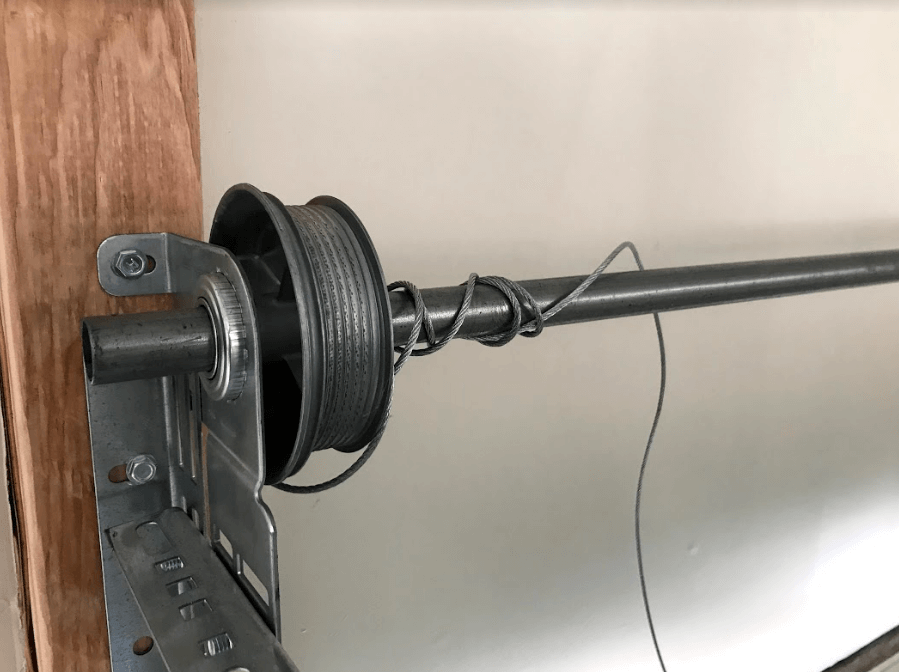
A garage door uses two cables, one on each side, that run from the bottom bracket of the door up to a drum at each end of the torsion bar. When the spring winds or unwinds, the drums rotate and the cables lift or lower the door in a straight, balanced line.
For the door to travel smoothly, both cables must carry equal load at all times. If one side pulls harder or holds more tension, the door tilts slightly during travel. That tilt puts uneven pressure on the tracks, rollers, and hinges on the tighter side.
Steel cables stretch slightly over time under repeated load. This is normal and expected. What causes problems is when one cable stretches more than the other, which happens when the load is not shared equally from the start or when one cable is older than the other.
Replacing only one cable after a break is one of the most common causes of this problem. The new cable is stiffer and shorter under load, while the older cable on the opposite side has already stretched and softened. The result is an immediate tension imbalance that worsens with every cycle.
For standard residential doors around East Ewell and Stoneleigh, you can Order Garage Door Cables Online as a matched pair to ensure both sides start from the same specification. Buying a pair removes the stretch mismatch risk from day one.
Torsion springs sit above the door and wind to store energy when the door closes. If the spring loses tension on one side, or if a single spring system is worn unevenly across its coils, the drums do not rotate at the same rate during travel. One cable winds faster, creating more lift on that side.
This is common in older torsion bar setups where the spring has been in service for over ten years. Properties near Ewell Downs and Cuddington that have not had a spring inspection in years are likely running on springs that have lost some of their original tension rating.
The drums that cables wind onto are fixed to the torsion shaft by set screws. If one drum shifts position along the shaft, even slightly, the cable on that side begins to wrap at a different angle. Over time this causes the cable to stack unevenly on the drum, which changes the effective pull length on that side.
This problem is more common in garages that see heavy daily use, such as homes on Kingston Road or Chessington Road where vehicles leave and return multiple times a day. The repeated shock load from fast closing cycles can vibrate set screws loose over months of use.
Cables carry vertical load. When a track is bent, misaligned, or a roller is seized, the door encounters horizontal resistance during travel. The cable on the side of the obstruction is forced to carry a combined vertical and lateral load, which creates effective tension on that side that does not exist on the other.
Near the Hogsmill riverside and Hogsmill Open Space, garages in older properties sometimes have timber frame structures that shift with ground moisture. A frame that moves seasonally can pull one track slightly out of plumb, creating the same side load effect on the cable without any mechanical fault in the cable itself.
The cable attaches at its lower end to a bottom bracket fixed to the bottom corner of the door panel. If this bracket bends, cracks, or pulls away from the panel, the cable anchor point shifts. Even a few millimetres of movement at the bottom of a two metre door creates a measurable tension difference by the time that load reaches the drum.
Properties in Auriol, Bourne Hall, and along Epsom Road often have sectional doors that have been in service for fifteen or more years. Bottom brackets on doors of that age may show stress cracking around the bolt holes that is easy to miss unless you are looking for it.
Cable length is not universal. A standard seven foot door and an eight foot door require cables of different lengths because the drum wrap count must match the door travel distance. Fitting a cable that is too long creates slack loops that can jump the drum. A cable that is too short reaches peak tension before the door is fully closed.
Understanding bottom seal compression changes at the closed position is part of this picture, because a door that does not reach full travel due to cable length errors will also show inconsistent seal contact across its width. For taller residential doors in properties along Park Hill Road or near Ewell Court Park, you can Purchase Heavy Duty Door Cables sized correctly for the greater travel distance.
Uneven cable tension rarely comes from a single cause. In most cases it is a combination of factors, a slightly worn spring, a drum that has shifted a fraction, and one cable that is older than the other. Each factor on its own might be small, but together they push the door progressively further out of balance with every cycle.
Homeowners near Ewell West Station, Gibraltar Recreation Ground, and along the A24 corridor who inspect their cable system once a year will almost always catch these issues at an early and inexpensive stage. Waiting until a cable snaps or the door drops on one side means a more involved repair and a higher chance of secondary damage to the tracks and bottom panels.
The cables in a garage door system are not complicated components, but they depend on everything around them being in good order. Keeping the springs, drums, tracks, and brackets in good condition is what allows the cables to do their job quietly and reliably for years at a time.
Address: 4949 Florin Perkins Rd Ste 30A, Sacramento, CA 95826
Phone: (916) 414-9070
Legacy Garage Door Depot, with supplier stores in Santa Clara and Sacramento, delivers premium garage door parts at competitive prices. The firm provides a comprehensive range of components for homeowners, technicians, and garage door companies. Their inventory includes reliable torsion and extension springs, garage door openers, Liftmaster models, remotes, and keypads. They also stock rollers, cables, tracks, hinges, and seals, offering a full selection of genuine and aftermarket replacement parts with fast local and online availability.
The store operates 24/7 online and can be reached on their primary lines at, +1 408-850-2617 and +1 916-414-9070.